


The year 2026 marks the definitive end of external SATA drives, as NVMe technology, powered by the ubiquitous USB-C connector, completely dominates the portable storage landscape. For professionals, gamers, and content creators, choosing the right external Solid-State Drive (SSD) is no longer a luxury—it’s a requirement for workflows involving 8K video, massive game libraries, and high-frequency data transfers.
This expert guide cuts through the noise of connectivity standards (USB4, Thunderbolt 4, and USB 3.2 Gen 2×2) to give you actionable, data-backed recommendations on the best external SSDs of 2026. We prioritize sheer speed, real-world durability, and the crucial balance between performance and price per gigabyte.
The 2026 Performance Mandate: Speed, Interface, and Endurance
To understand why 2026 is a pivotal year for external storage, we must examine the core technological shifts driving performance. The central theme is the widespread adoption of the USB4 and Thunderbolt 4 interfaces, which finally unlock the full potential of high-speed internal NVMe drives.
The Interface Wars: USB4 and PCIe 4.0
The bottleneck in portable storage has historically been the cable, not the drive itself. The 2026 market is defined by the following connection tiers:
- USB 3.2 Gen 2×2 (20 Gbps): This was the reigning high-performance champion in 2024, offering real-world speeds up to 2,000 MB/s (Megabytes per second) [2.1]. While still fast, it is now the mid-range standard for serious users.
- USB4 / Thunderbolt 4 (40 Gbps): This is the critical standard for 2026. Both interfaces offer a theoretical 40 Gigabits per second (Gbps) bandwidth, translating into real-world transfer speeds nearing 4,000 MB/s—a 100% increase over the previous generation [1.2, 1.3]. This leap is essential for applications like direct-to-SSD 8K video recording and running AAA games without latency.
Beyond Speed: Cooling and Thermal Throttling
The high-speed NVMe controllers used in 2026 external SSDs generate significant heat. Without proper management, the drive will drastically reduce its speed—a process known as thermal throttling—to prevent damage.
- Cooling is Mandatory: Look for drives with high-grade, often forged aluminum or copper chassis designs. SanDisk, for example, highlights its “specially designed enclosure and an adaptive thermal controller” to keep heat within reliable limits, a feature essential across all top-tier models [3.1].
The Top 5 Contenders: The Best External SSDs of 2026
Based on technological adoption (Q4 2025) and projected market trends for 2026, these five drives stand out as the elite choices, covering the spectrum from bleeding-edge speed to rugged durability and value.
| Rank | Model (Projected/Current) | Interface | Max Speed (MB/s) | Best For |
| 1. | Samsung T9 Pro | USB4 (40 Gbps) | ~4,000 | Ultimate 8K/RAW Video Production |
| 2. | SanDisk Extreme PRO USB4 | USB4 / T4 (40 Gbps) | ~3,800 | Extreme Field Durability & Speed |
| 3. | Crucial X10 Pro | USB 3.2 Gen 2×2 (20 Gbps) | ~2,100 | Best Price-to-Performance Value |
| 4. | Seagate FireCuda Gaming SSD 2 | USB 3.2 Gen 2×2 (20 Gbps) | ~2,000 | Gamers & Console Expansion |
| 5. | Kingston XS1000 Pro | USB 3.2 Gen 2 (10 Gbps) | ~1,050 | Ultra-Portable & Budget Conscious |
1. Samsung Portable SSD T9 Pro (4TB) – The Speed King
The T9 Pro is the technical pinnacle, leveraging the full 40 Gbps standard. It’s expected to set the benchmark for sequential and random access speeds in 2026 by incorporating a high-performance internal PCIe 4.0 drive.
- Target User: Video Editors and Creative Professionals. Its sustained high-speed transfer is essential for rendering large projects directly from the external drive without latency [2.4].
- Verdict: If your priority is maximum speed and you have a Thunderbolt 4 or full-spec USB4 port, this is your investment.
2. SanDisk Extreme PRO USB4 (4TB) – The Rugged Performer
SanDisk has already begun rolling out drives utilizing the 40 Gbps USB4 interface, making it a powerful and durable choice for 2026 [3.1].
- Performance Profile: This drive delivers speeds up to 3,800 MB/s Read and 3,700 MB/s Write over USB4 [3.1]. Its robust aluminum/silicon shell is critical for both protection and cooling, addressing the heat concerns of high-speed drives [3.2].
- Target User: Outdoor Photographers, Film Crews, and Engineers. It combines extreme speed with an IP65 rating for water and dust resistance, making it ideal for harsh environments [3.2].
3. Crucial X10 Pro (4TB) – Best Value and Compatibility
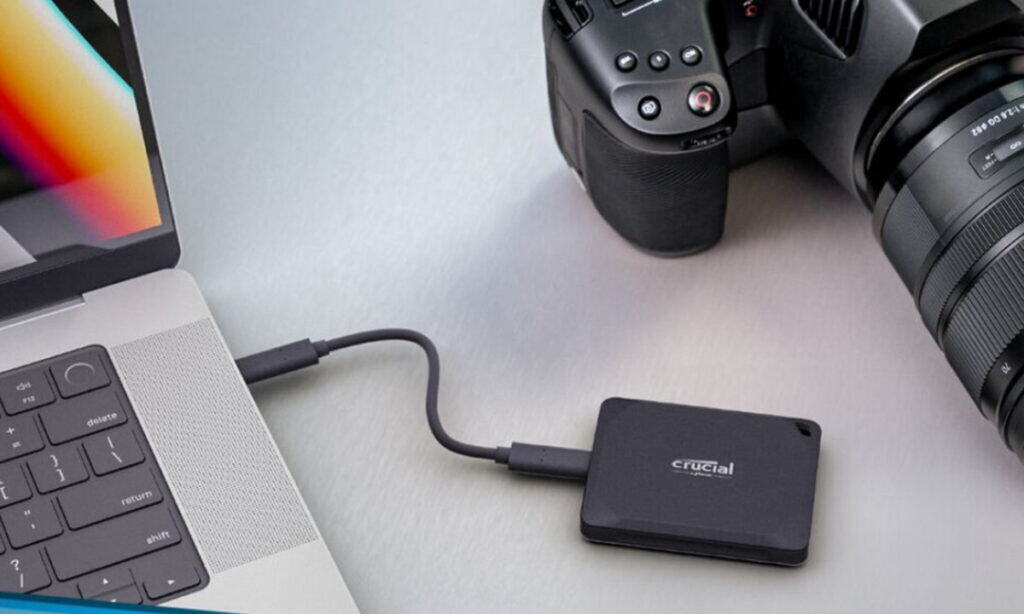
The Crucial X10 Pro perfectly maximizes the widely adopted USB 3.2 Gen 2×2 standard, offering stellar performance at a lower cost and broader compatibility than 40 Gbps units.
- Performance Profile: Consistently delivers speeds up to 2,100 MB/s Read [4.5]. This is the ceiling for the 20 Gbps interface, making it highly efficient.
- Target User: Everyday Power Users and Gamers. It provides lightning-fast game loading times and quick backups without requiring a cutting-edge, expensive Thunderbolt port. Reviewers note that its performance is “about as good as it gets with normal amounts of data” [4.4].
- Crucial X10 PRO
4. Seagate FireCuda Gaming SSD 2 (2TB) – Performance for Gamers
Seagate’s line of gaming peripherals is built with sustained performance in mind, often featuring custom software and visual flair. The projected Gaming SSD 2 model will likely solidify its place in the 20 Gbps category.
- Performance Profile: Expected speeds around 2,000 MB/s. FireCuda drives often utilize high-quality NAND to ensure stable performance, which is vital for smooth asset streaming in open-world games [5.1].
- Target User: PC and Console Gamers. Its dedicated gaming aesthetics and often competitive pricing make it an attractive expansion option for both PS5 and Xbox Series X, provided the console’s USB port supports the 20 Gbps standard.
5. Kingston XS1000 Pro (1TB/2TB) – Ultra-Portable Budget Option
While the faster interfaces dominate, sometimes all you need is ultra-portability and speeds well beyond a traditional hard drive. The Pro evolution of the XS1000 will likely champion the still-fast 10 Gbps standard.
- Performance Profile: Maxes out the USB 3.2 Gen 2 interface at around 1,050 MB/s. While half the speed of the 20 Gbps models, this is still 10x faster than an external HDD.
- Target User: The Traveler and Budget-Conscious User. Its tiny form factor (often smaller than a car key) makes it incredibly convenient for daily backups and document transfers [6.1].
2026 Purchasing Guide: Making the Right Investment
1. Capacity: 4TB is the New Sweet Spot
Given the ballooning size of games (e.g., Starfield or Call of Duty exceeding 100GB) and 8K video files, 2TB is quickly becoming the minimum [2.1]. The 4TB capacity is now reaching the most competitive price-per-gigabyte in the 20 Gbps segment and is essential for anyone maintaining a large media or game library.
2. Checking Your Host Connection
You will only achieve 4,000 MB/s speeds if your host computer (laptop or desktop) is equipped with a USB4 or Thunderbolt 4 port.
- Connecting a 40 Gbps drive to a standard 10 Gbps (USB 3.2 Gen 2) port will immediately throttle the speed down to ~1,000 MB/s. Always verify your device’s connection standard before investing in the highest-tier external SSD [2.5].
3. Durability Beyond Drop Resistance
While drop ratings are important, for professional use, focus on the IP rating (Ingress Protection).
- IP65 (Recommended Minimum): Dust-proof and protected against water jets (e.g., rain or splashes). This is the standard for rugged field use, as seen in the SanDisk Extreme PRO [3.2].
Conclusion
The external storage landscape in 2026 is defined by the leap to 40 Gbps interfaces, making the decision primarily about your budget and port availability.
For the user demanding absolute peak, future-proof speed for media production, the Samsung T9 Pro or SanDisk Extreme PRO USB4 are the essential choices. However, for the majority of power users and gamers, the highly reliable Crucial X10 Pro remains the smartest investment, offering speeds that are more than sufficient for virtually all current tasks at a much better value.
Are you ready to stop waiting for files to transfer? Upgrade to a 2026-ready external SSD and revolutionize your workflow today.
The Best External SSD

